
Mill Products
Published · Last updated
Mill products companies (metals, building materials, textiles, wood, paper and similar process-based manufacturers) sell by dimension, grade and weight, run capital-intensive equipment and face volatile raw material costs. LinkedWorld helps mid-market mill businesses run SAP so that order promising, production scheduling, inventory by characteristic and asset maintenance work from one data set. Through local SAP partners in each country and one shared methodology, the alliance supports mills serving domestic and export markets.
Salespeople cannot confirm availability by grade, size or width, so quotes are slow and orders get overpromised.
Production scheduling ignores machine constraints and changeovers, leading to missed delivery dates and excess scrap.
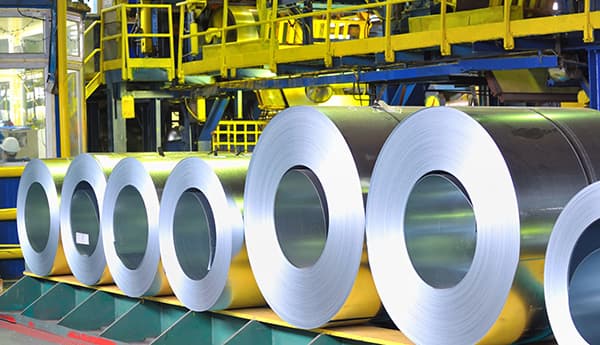
Inventory with variable dimensions, coils or rolls is hard to track by characteristic and batch.
Unplanned equipment downtime on critical machines disrupts output and raises maintenance costs.
Tariffs, carbon rules and packaging regulations change quickly, and compliance data is gathered manually.
0— documented case studies
- The alliance configures SAP availability checks by product characteristic, giving sales real-time stock and capacity for accurate order promising.
- LinkedWorld partners implement constraint-based planning in SAP that accounts for machine capacity, sequencing and changeovers.
- The alliance sets up batch and characteristic management in SAP to track coils, rolls, sheets and remnants precisely.
- LinkedWorld implements SAP asset management with preventive maintenance plans for critical mill equipment to reduce unplanned stops.
- The alliance embeds compliance and product data in SAP, with local partners covering each country's regulatory reporting.
FAQ
What counts as mill products in SAP terms?▾
SAP groups metals, building materials, textiles, wood, paper and packaging producers under mill products. These businesses share traits: they process raw materials in capital-intensive plants, sell products defined by characteristics such as grade, thickness or width, and often cut or convert material to customer order. LinkedWorld partners configure SAP around those shared processes.
Can SAP manage products sold by dimension, grade and weight?▾
Yes. SAP uses variant configuration and characteristic-based batch management to handle products defined by attributes like width, length, grade or finish. Sales can search stock by characteristic, production can plan cutting or slitting to order, and inventory reflects actual pieces, coils or rolls. LinkedWorld partners define the characteristic model with you during Blueprint.
How does SAP improve delivery reliability in a mill?▾
SAP combines real-time availability data with constraint-based planning, so order promises reflect both stock and plant capacity. When supply or demand changes, planners see the impact and can reschedule. Integrating sales, production and logistics in one system reduces overpromising and helps fill rates improve. LinkedWorld partners tune planning parameters to your equipment and product mix.
How does LinkedWorld's alliance support mill products companies with plants or customers abroad?▾
Mill businesses often run plants in one country and export to many. LinkedWorld pairs you with local SAP partners in each market, all working to The LinkedWorld Standard: Diagnosis, Blueprint, Implementation, Go-Live, Support and Global Roll-out. You keep one production and sales template across sites while each partner covers local tax, customs and compliance.
Which SAP edition fits a mid-sized mill?▾
Many mid-sized mills with complex production choose SAP Cloud ERP Private or SAP Cloud ERP (S/4HANA) for their manufacturing depth. Smaller converters or distributors of mill products may start with SAP Business One plus add-ons. SAP BTP can extend any edition. LinkedWorld partners assess plant complexity and growth plans during Diagnosis before recommending an option.